Washington's First Disaster: A Laurel Highlands Drive Through the War Nobody Remembers
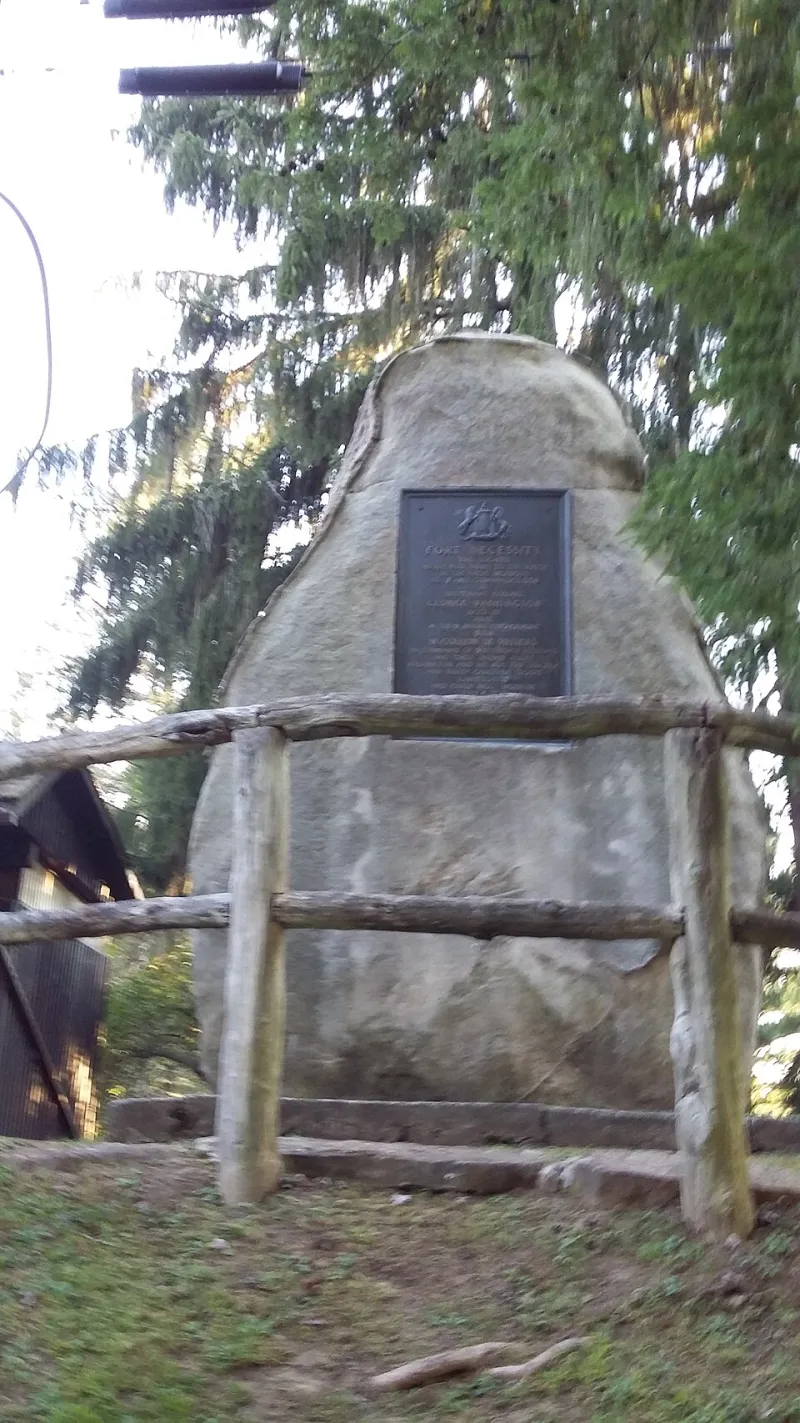
Photo: Naturelover411, CC BY-SA 4.0, via Wikimedia Commons
The War America Forgot
Ask most road-trippers about Pennsylvania's battlefields and you'll hear Gettysburg, maybe Valley Forge, possibly Brandywine. But rewind two decades before the Declaration of Independence and you'll find something wilder: a global war that ignited right here, in the dense woods of the Laurel Highlands, when a young George Washington botched a diplomacy mission so badly it dragged seven nations and two empires into conflict.
Historians call it the French and Indian War. Europeans call it the Seven Years' War — and they'll tell you it was arguably the first true world war, fought from the Caribbean to the Philippines. Its first shots? Fired in a Pennsylvania meadow.
Here's the best part: you can drive the whole story in a weekend, and you'll rarely share a parking lot with anyone.
Day One: Where It All Went Wrong
Start south, near the Maryland line, at Fort Necessity National Battlefield outside Farmington. This is the humblest national battlefield you'll ever visit — a reconstructed circular stockade of sharpened logs in a rolling meadow. In July 1754, a rain-soaked, outgunned 22-year-old Washington hunkered down here with his Virginia provincials and a handful of British regulars, and surrendered to a French force. It's the only surrender of his entire career, and he signed the capitulation document — written in French, which he couldn't read — allegedly taking responsibility for the assassination of a French diplomat.
The visitor center film does a great job unpacking how a botched backwoods skirmish snowballed into a global conflict. Walk the meadow loop trail. It takes twenty minutes, and it's quietly eerie.
A few miles up Route 40, pull into Jumonville Glen, a rocky, moss-draped hollow managed by the national park. This is where it all actually started: Washington's Native allies surprised a French scouting party here at dawn in May 1754, and in the confusion, the diplomat Joseph Coulon de Jumonville was killed — possibly murdered, possibly in cold blood, accounts vary to this day. Standing in that ravine, you can feel why the site still unsettles people.
Day Two: Braddock's Nightmare and the Fort That Fought Back
Point your car north on Route 40 — the historic National Road — and follow the route of Major General Edward Braddock's catastrophic 1755 march toward Fort Duquesne (modern Pittsburgh). Braddock's army of 2,000 was ambushed near present-day Braddock, just outside Pittsburgh, and shattered so badly that the general died on the retreat. Washington, by then a colonial officer with a target on his back, had two horses shot out from under him and four bullet holes in his coat. Look for historical markers along the highway; the whole corridor is dotted with them.
Your destination is Fort Ligonier, a fully reconstructed and genuinely excellent fort museum in the charming town of Ligonier. In October 1758, the fort withstood a French attack — and the confused, bloody friendly-fire engagement that followed involved a young colonel named Washington, once again in the middle of everything. The fort's palisades, artillery, and museum artifacts (including a collection of Washington's personal papers) make this the best stop of the trip for families.
Linger in Ligonier afterward. The town square, coffee shops, and the nearby drive up to Idlewild country make a relaxed wind-down after two days of ambushes and sieges.
Making the Drive Work
The full loop runs about 150 miles through Fayette and Westmoreland counties, best done over two days or stretched into three with a night in Ligonier or Farmington. Fall is spectacular here — the ridgelines blaze with color — but summer weekends bring living-history events at both forts, with musket demonstrations and reenactors who genuinely know their stuff.
Pair the trip with Fallingwater or Fort Duquesne's footprint in Pittsburgh's Point State Park if you want to extend the story to its conclusion: the fall of the French stronghold in 1758, and the frontier that opened beyond it.
Why Bother?
Because this is the origin story. Without the blunders at Jumonville Glen and Fort Necessity, there's no French and Indian War, no crushing British war debt, no new taxes on the colonies — and arguably no Revolution at all. Washington learned how to lose in these woods, and what he learned here shaped everything that came after.
Come for the history. Stay for the empty trails, the mountain air, and the strange pleasure of standing where a world war began — with the whole meadow to yourself.