The Home Front Highway: A Bucks and Chester County Drive to the Women Who Kept the Revolution Alive
Photo: Didier Descouens, CC BY-SA 4.0, via Wikimedia Commons
Ask most people about the Revolutionary War in Pennsylvania and you'll hear about Valley Forge, Brandywine, and Washington's headquarters. All fine places. But drive the back roads of Bucks and Chester counties and you start noticing what the brochures skip: the war ran on the labor of women who never fired a shot, held no commission, and rarely got a plaque.
This two-day loop — roughly 90 miles if you don't dawdle, and you should dawdle — traces the home front of the Philadelphia campaign of 1777. It's a route of stone farmhouses, Quaker meetinghouses, and small towns where the past is stacked on every shelf. Bring a cooler for the farmstands.
Day One: Bucks County, Where the Harvest Went to the Army
Start in New Hope or, better, a bit north of it, along the Delaware. When the British occupied Philadelphia in the fall of 1777, this stretch of river became the supply line for American forces — and the women of Bucks County ran it. With husbands in the militia or at Valley Forge, they managed harvests, negotiated with Continental quartermasters, and sometimes simply refused to hand over the grain.
Head west on River Road to Washington Crossing Historic Park, then cut inland toward Solebury. The countryside here is classic Bucks: horse fences, old millstone houses, and the Van Sant Covered Bridge spanning Pidcock Creek. Stop, walk across, and think about the wagon traffic these narrow crossings once carried — much of it loaded by women managing farms alone.
Lunch in Lahaska or Bucks County's Peddler's Village area, but the better bet is one of the farmstands along Route 263 and 413. In 1777, the Continental Army requisitioned produce from exactly these fields. The difference between requisition and theft was often the negotiating skill of the woman holding the farm — a story local historians at the Bucks County Historical Society library in Doylestown tell far better than any roadside sign.
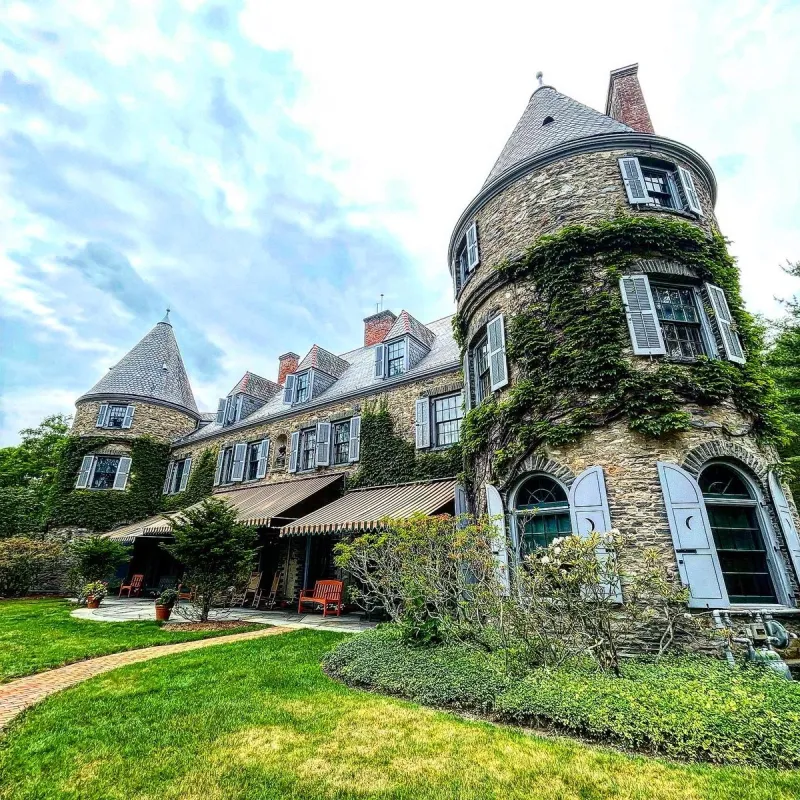
In the afternoon, visit Fonthill Castle and the Mercer Museum in Doylestown. Henry Mercer built his museum around the tools of ordinary life — the butter churns, looms, and hearth cranes that women used to hold households together through the war years. It's the closest thing on this route to a monument for them.
Overnight in Doylestown, where dinner spots on State Street range from tavern-style to surprisingly ambitious.
Day Two: Chester County, Spies and Suppers
Cross down to Chester County, about an hour's drive south, and the landscape turns to rolling farmland and creek valleys. This is the ground the armies fought over in September 1777 — and the ground local women defended in their own way.
Begin at the Brandywine Battlefield area near Chadds Ford. The battle gets the attention, but linger on the civilian story: farms overrun, homes used as field hospitals, and women like the Quaker households of the region tending wounded soldiers from both sides within days of the fighting.
From there, it's a short hop to Kennett Square and the villages around it. The region's Quaker meetinghouses — several welcome visitors on weekends — are quiet, plain buildings where women's voices carried real weight long before suffrage. Chester County was also home territory for the spy networks and courier lines that moved intelligence past British lines; ask at the Chester County History Center in West Chester about the local women whose names survive only in letters and pension applications.
Lunch in West Chester — the borough's dining scene punches well above its size — then wind north through Phoenixville country toward Valley Forge. Arriving at Valley Forge National Historical Park in late afternoon is the move: the tour roads empty out, the fieldstone huts glow in low light, and it's easier to picture the supply wagons that kept arriving all winter, loaded largely by farm families led by women.
Why This Route Matters
Pennsylvania has marked its battlefields beautifully. The home front is harder to find — it lives in graveyards behind meetinghouses, in pension files, in the fine print of quartermaster records. Driving this loop, you start to see the 1777 countryside as it actually worked: not a stage for armies, but a network of farms, kitchens, and crossroads run by people whose names mostly didn't make the monuments.
Somebody ought to build a proper heritage trail for them. Until then, this drive is a good start.
Practical Notes
- Best season: Late September through October — harvest season, fittingly, and the light on those covered bridges is unbeatable.
- Time needed: Two days, one night. Add a third if you want to linger at Valley Forge.
- Don't miss: The Mercer Museum's ordinary-tools collection; it's the emotional core of the trip.
- Roads: Stick to River Road (Route 32) in Bucks and the back roads of Route 1 and Route 926 in Chester — the highways save no time and cost you everything.