Thirteen Thousand Men and a Hangover: Driving Washington's Whiskey Rebellion Route West
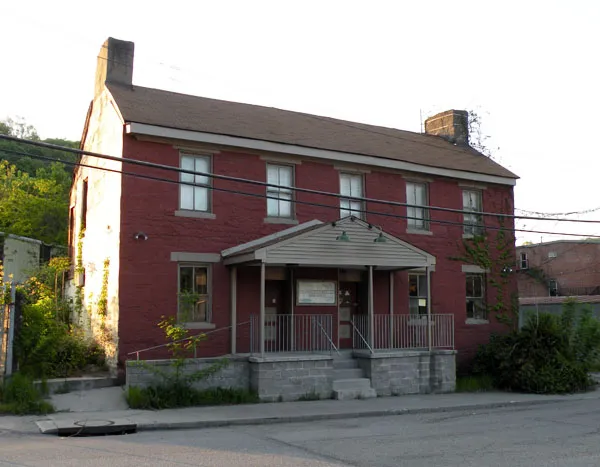
Photo: Lee Paxton, CC BY-SA 4.0, via Wikimedia Commons
Here's a fact that surprises even lifelong Pennsylvanians: the only sitting president ever to command American troops in the field did it here, in our state, against our own farmers. In the autumn of 1794, George Washington climbed into a carriage and rode at the head of a 13,000-man army — bigger than anything he'd commanded at Yorktown — into the Alleghenies to put down the Whiskey Rebellion.
The rebels, for their part, mostly melted away. Washington never fired a shot. But the route he took, and the towns along it, tell one of the strangest and most underrated stories in American history — and it makes one heck of a road trip.
Day One: Philadelphia to Carlisle — mustering the muscle
Start where Washington started, in Philadelphia, then the capital of the United States. The rebellion out west wasn't some fringe tantrum: frontier distillers, many of them Revolutionary War veterans, were refusing to pay Alexander Hamilton's whiskey excise tax. To them, it looked a lot like the kind of taxation-without-representation they'd gone to war over. Washington, ever the pragmatist, first tried diplomacy. When that failed, he invoked the Militia Act and called up the states.
The army gathered at Carlisle, and that's where your drive should begin in earnest. Carlisle was a frontier boomtown in 1794, and the troops camped on its commons — today the grounds of Dickinson College and the Cumberland County Historical Society, where you can dig into the rebellion's paperwork and personalities. Walk the old stone streets and picture tents where students now toss frisbees.
Day Two: Over the mountains to Bedford
West of Carlisle, the land starts to fold. This is the driving part of the trip that earns its keep — US Route 30, the old Lincoln Highway, threads the same gaps through the ridges that Washington's column did, grinding up and over the Allegheny Front.
Bedford is your reward. Washington stopped here, staying near the site now marked by the lovely 1806 Espy House, where he dined with his officers. The town has more colonial charm per square block than just about anywhere west of Harrisburg, and the historic district is made for a slow stroll. Grab lunch, then continue to Fort Ligonier, a beautifully reconstructed French and Indian War fort that was already a relic by 1794 — a nice reminder of how many layers of history stack up in these hills.
Day Three: Into the rebellion's heartland
Cross into Fayette County and the story turns personal. This was Monongahela country — rye country — where farmers floated whiskey downriver instead of grain that would spoil on the trip east. The Braddock's Grave battlefield site nearby is worth a stop; Washington had been here before, as a young officer in a very different uniform.
The rebellion's real climax happened at Bower Hill, near present-day Monongahela, where in 1794 tax inspector John Neville's fortified home was burned by an armed mob. The area is now partly residential and partly parkland, but interpretive signs and the Woodville Plantation nearby — a living history site with real period interpreters — help you picture the standoff.
End in Pittsburgh, the city the army ultimately occupied without a fight. By the time Washington reached the frontier, the rebellion had collapsed; he turned back east, leaving General "Light-Horse Harry" Lee in command. Two men were later convicted of treason and pardoned by Washington himself — a closing act of mercy that said as much about the new republic as the army did.
Why the drive matters
There's a temptation to treat the Whiskey Rebellion as a footnote — a tax dispute with funny hats. Stand on a ridge outside Bedford and it reads differently. This was the moment the United States proved its laws would stick, the first great test of federal authority, fought not against a foreign king but against neighbors with stills in the barn. Washington, who had spent the war complaining about weak central power, chose to answer frontier defiance personally.
The whole route runs about 300 miles and makes an easy long weekend, with Carlisle, Bedford, and Ligonier offering plenty of beds and better food than you'd expect. Do it in October, when the ridges are on fire with color and the mountain air carries a nip that might just make you appreciate what all the fuss was about.
And yes — have a rye whiskey when you get to Pittsburgh. It's the historically responsible thing to do.