Stone Stacks in the Woods: A Back-Roads Hunt for Pennsylvania's Forgotten Iron Furnaces
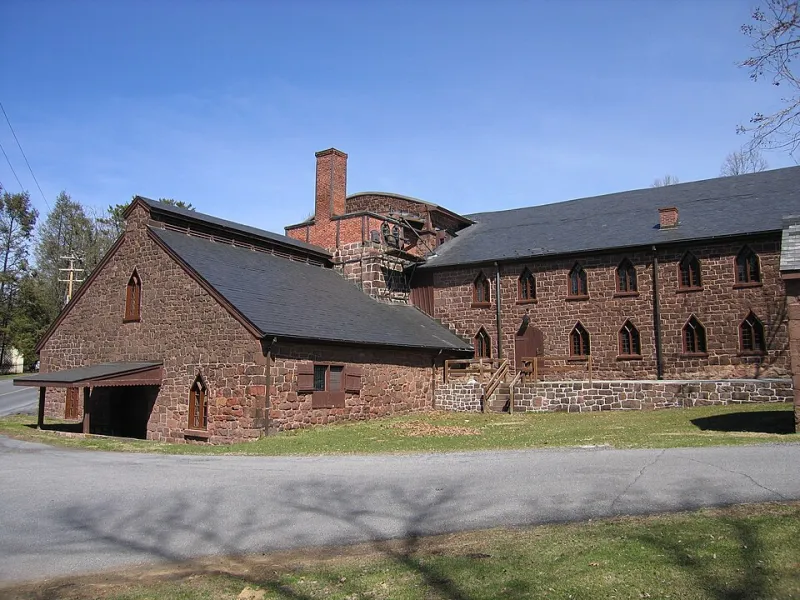
Photo: Wherring at en.wikipedia, CC BY-SA 3.0, via Wikimedia Commons
Somewhere in the woods outside Pine Grove, a forty-foot stone stack rises out of the undergrowth like a ruin nobody bothered to explain. No parking lot. No gift shop. Just a mossy colossus of mortared sandstone, once glowing at three thousand degrees, now cold and quiet and shockingly easy to miss.
That's the thing about Pennsylvania's iron furnaces: they're everywhere and nowhere. Between 1820 and 1850, this state produced more iron than any other place on Earth, and it did it with hundreds of charcoal-fueled stone pyramids scattered through the ridges of the Juniata Valley, Lebanon Valley, and the Schuylkill headwaters. When the industry consolidated and moved west, most of those furnaces were abandoned in place — which means today they double as the strangest, most rewarding scavenger hunt a history-minded road-tripper could ask for.
Here's how to spend two days chasing them.
Day One: Cornwall and the Lebanon Valley — Iron at Its Grandest
Start where the story ends best preserved. Cornwall Iron Furnace in Lebanon County is the only complete cold-blast charcoal iron furnace left in the western hemisphere, and it's a genuine time capsule. The 1742 stack, the blast machinery, the charcoal house — it all shut down in 1883 and simply stayed put. A guide will walk you through the charging room and show you the water wheel pit, and the tour takes about ninety minutes of pure industrial wonder.
Grab lunch in Lebanon or Annville, then point the car north toward Boggs Run and the Union Furnace country near Pine Grove. Some of these stacks sit just off gravel roads; others hide a quarter-mile up unmarked trails. Bring decent shoes and a sense of adventure. A stone furnace in the middle of nowhere tells you everything about how the industry worked: ironmasters built where ore, timber, and water came together, and when one of those ran out, they walked away.
End the day in Pottsville or Schuylkill Haven — coal country, yes, but the coal trade only boomed because iron furnaces demanded fuel first.
Day Two: The Juniata Valley — Where the Forest Became Iron
Day two is the scenic payoff. Route 75 and 22 wind through the Frankstown branch of the Juniata, a valley that once held dozens of furnaces with names like Martha, Etna, and Arch Spring. The town of Williamsburg and the ruins near Canoe Creek reward patient explorers.
The must-see is Greenwood Furnace State Park near Huntingdon. This is the furnace hunt at its most civilized: a restored stack, the original ironmaster's mansion, a stack of charcoal makers' mounds, and a swimming beach where the village pond once fed the works. Rangers give excellent tours in summer, and the hiking trails loop past the coke ovens and the company village. It's the rare place where you can swim and contemplate the birth of American heavy industry in the same afternoon.
If you have daylight left, detour to Curtin Village near Bellefonte, where the Eagle Iron Works ran — improbably — until 1921, making it the last charcoal furnace in America to go cold.
The People Behind the Stone
What makes this trip more than pile-of-rocks tourism is the human story. Each furnace needed roughly 6,000 acres of forest to sustain its charcoal appetite, which meant an army of woodcutters and colliers — many of them Irish, German, and Welsh immigrants — lived in company villages that vanished when the fires went out. Ironmasters like the Bird and Coleman families became aristocrats; canal boatmen on the Main Line of Public Works hauled the pig iron east to Philadelphia forges; and by 1860, Pennsylvania iron was being hammered into the rifles and railroad rails of a coming war.
The small museums along the way — the Lebanon County Historical Society, the Huntingdon County library's local history room — do a fine job with this social history if you want the deep cut.
Practical Notes for the Road
- Best season: Late spring through fall. Some rural stacks are on game lands or private property with informal access — a quick check with the local historical society saves headaches.
- Navigation: Cell service in the ridges is spotty. Download offline maps and grab county historical society furnace maps before you go; they're gold.
- Time needed: Two days covers Cornwall to Greenwood comfortably. Add a third if you want to push into Centre County.
- Don't skip: The charcoal smell. At Greenwood, rangers sometimes demonstrate colliery techniques — it's the closest you'll get to the sensory reality of the trade.
Pennsylvania's furnaces never got the battlefield monuments or the museum complexes. They got the woods, the silence, and the occasional historical marker. That's exactly why they're worth the drive — you'll come home with the feeling of having found something, because you did.