The Plaque Said So: A Skeptic's Drive Through Pennsylvania's Presidential Sleepover Lore
There may be no phrase in American tourism quite so load-bearing as 'Washington slept here.' Pennsylvania, which spent the 1770s and 1780s hosting a war and a government at the same time, has more of those claims than any state has a right to. Add Lincoln's pre-inaugural train trip, Buchanan's summers in the mountains, and every small-town tavern that ever poured a drink for a passing dignitary, and you get a landscape where a startling number of bedposts have a story attached.
Some of those stories hold up. Plenty don't. The checking is the fun part.
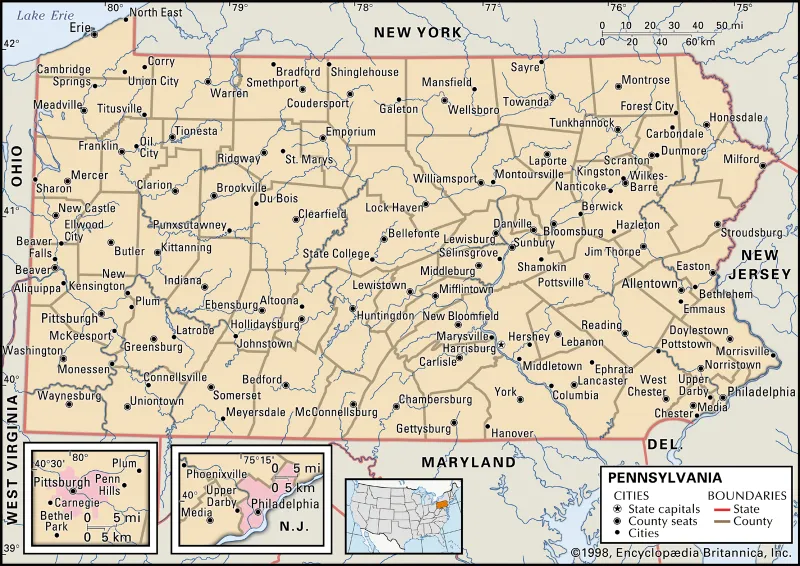
This route runs from Philadelphia west through York and Gettysburg to Bedford, with an optional swing north to Pittsburgh. Call it three or four days, roughly 300 miles, and a rolling seminar in how local history gets made. Bring comfortable shoes and a healthy suspicion of laminated clippings.
Philadelphia: Start where the receipts are
Begin at Sixth and Market, in the glass pavilion beside the Liberty Bell. Under your feet, archaeologists in the early 2000s uncovered the footprint of the President's House, where George Washington and then John Adams lived and worked from 1790 to 1800. The building is gone; the foundation is real, and so is the documentary record. This is what a presidential address looks like when historians, not the chamber of commerce, are holding the pen.
Then head up Germantown Avenue to the Deshler-Morris House, where Washington rented rooms for the summers of 1793 and 1794 to escape both the yellow fever and the office. The National Park Service runs the place. You can walk the same stairs. He genuinely settled in here, wrote letters from here, and complained about the commute from here.
Use Philadelphia as your calibration stop. Spend an hour with real evidence and you will spot the softer claims from across a parking lot.
Gettysburg: The best-documented night in the state
The David Wills House on Lincoln Square is the gold standard. Lincoln arrived the evening of November 18, 1863, had dinner, went upstairs, and by several accounts did his final trimming of the address in a second-floor bedroom before walking to the cemetery the next morning. The Wills family left written accounts. The town's newspapers left more. You can stand in the room.
That is what a well-supported overnight looks like. Which is useful context, because Gettysburg also has its share of gentler claims posted above doorways around the square. There's nothing wrong with them, exactly. Just notice the difference in tiers: one site is a National Park Service museum, the other is a photocopy taped inside a display case.
York: A tavern that really did know everybody
The Golden Plough Tavern is a half-timbered survivor from 1741, and it sits in a colonial complex alongside the Gates House, a short stroll from where the Continental Congress ran the war effort from 1777 into 1778 while the British occupied Philadelphia. The tavern's guest register, in the sense that it has one, is delegates, officers, couriers, and people with business in a capital city that happened to be a small Pennsylvania town.
Washington's name gets attached to the place regularly, and maybe he did stop. What the surviving record supports is a lot of congressmen and a lot of ale. That's still a great afternoon. Just know which part you're standing in.
Bedford: A presidential roster with uneven paperwork
Bedford Springs was one of the great mountain watering places of the 1800s, and its own literature cheerfully lists a parade of presidents who took the waters. James Buchanan is the solid entry — he summered here in the 1850s, and the resort is often called his summer White House, a phrase that has done heroic work in tourism brochures ever since.
The rest of the list shifts depending on which pamphlet you pick up. That is not a scandal; it's just how a resort's memory works over 150 years. If you ask at the desk which stays they can actually document, you'll get an answer that's more interesting than the brochure.
Pittsburgh (optional): Whiskey, and a hotel that isn't there
Washington rode west in 1794 to put down the Whiskey Rebellion, and he spent time at Woodville Plantation, John Neville's house in what is now Collier Township. Local accounts have him staying the night; the visit itself is well established. It's a good reminder that western Pennsylvania's presidential history is not all colonial cosplay.
Lincoln's February 1861 visit is the other bookend. He spoke at the Monongahela House, a hotel that has since been demolished, leaving a historical marker and a story. A site doesn't have to survive for the stay to be real — but it does mean you'll be reading about it on a sidewalk.
A field guide to reading the plaque
Ask who hung it. Blue-and-gold markers from the Pennsylvania Historical and Museum Commission go through review. A sign a business paid for does not. Both can be right; only one has been argued over by people with citations.
Watch the hedges. 'Tradition holds,' 'it is said,' 'reportedly,' and 'in later years the story grew' are the language of a claim that knows it's thin. That's not dishonesty. That's a small town being careful and hopeful at the same time.
Do the calendar math. Was the president alive? In office? Anywhere near this county that year? A surprising number of legends collapse on a date.
Follow the citation chain. Often every version of a story traces back to a single nineteenth-century county history written decades after the fact. One source repeated eleven times is still one source.
Mind the verbs. Slept, dined, spoke, changed trains, and passed through are not the same claim. Plenty of genuine visits get upgraded to overnights somewhere along the way.
Ask a local historian. County historical societies are usually delighted someone cares, and they'll often tell you plainly which stories they trust and which they repeat because the town loves them.
The practical version
Do Philadelphia and Germantown on day one, York on day two, Gettysburg on day three, and Bedford as a long fourth day or a separate trip. Check hours before you go; several of these sites keep seasonal schedules or limited weekend openings, and the smaller ones run on volunteers. Fall is ideal — the drives are prettier and the crowds are thinner than in July.
And keep one thing in mind as you go. The legends aren't a failure of history. They're a record of what a town wanted to be true, which is its own kind of evidence. Believe the receipts. Enjoy the sign anyway.