Rolling Credits, Rolling Hills: Where to Stand in the Frame on a Pennsylvania Movie-Location Drive

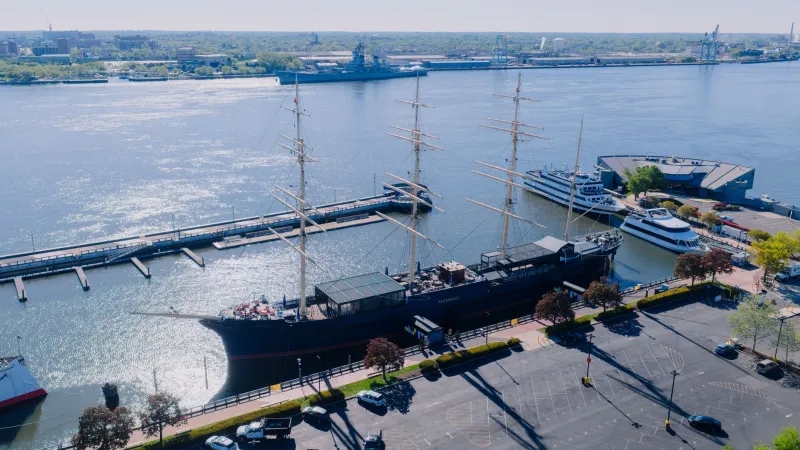
Photo by Photo by John Kostyk on Unsplash on Unsplash
Pennsylvania has been playing itself on screen for over a hundred years — and mostly getting away with it. Sometimes the state plays other places entirely: a small Ohio town, a fictional Virginia crossroads, even 18th-century Paris. But when directors want genuine American history in the frame, they keep coming back to the same handful of streets, fields, and stone porches here in the Commonwealth.
This loop runs about 250 miles from Philadelphia to Gettysburg and back, and it's built for people who want both things at once: the fun of standing where a famous scene was shot, and the real story of what happened on that exact ground long before a film crew showed up.
Old City, Philadelphia: Where the Colony Becomes a Movie Set
Start in the neighborhood that needs the least help from Hollywood. The cobblestoned blocks around Independence Hall have appeared in everything from National Treasure (2004) to 1776, and honestly, the location does most of the acting. Nicolas Cage's character sprinted past these same brick facades that Sam Adams and John Dickinson argued outside of in the 1770s.
The trick here is to look up and behind the landmarks. Elfreth's Alley — the oldest continuously inhabited residential street in America, dating to 1702 — has doubled for colonial-era streetscapes in countless productions precisely because it never stopped being real. No set designer built those trinity houses. People have lived in them for over three centuries.
The history the cameras skip: Independence Hall's most famous moment, the signing of the Declaration, happened in a room you can still stand in — but the building spent decades afterward as a neglect-worn afterthought until it was rescued in the 1850s. The pristine version on screen is a restoration.
Valley Forge: The Fields That Play Themselves
Head west about forty minutes to Valley Forge National Historical Park. Film crews have used the rolling fields and reconstructed huts for documentaries and dramas about the Revolution, and it's easy to see why — the landscape looks exactly like what a director wants the winter of 1777-78 to look like.
The real story is grittier and better. Washington's army didn't fight a battle here; it fought starvation, smallpox, and desertion. Roughly 2,000 soldiers died during the encampment, and the army that marched out in June 1778 was better trained, better organized, and — thanks to Baron von Steuben's drilling — a genuinely professional fighting force. When you stand on the Grand Parade grounds, you're standing in the spot where that transformation happened.
Lancaster County: The Amish Backdrop Hollywood Can't Quit
Witness (1985) turned Lancaster County into a movie star, and the tourism office has never looked back. The film used the Strasburg area and the Strasburg Rail Road, which is a legitimate historic site in its own right — a working railroad dating to 1832, making it one of the oldest short lines in the country.
Ride the train, then detour through the surrounding farmland, which has been continuously farmed since the early 1700s by Mennonite, Amish, and Quaker families. The movie version is a simplification, but the underlying story — one of the oldest religious-refuge communities in America — is genuinely remarkable.
Gettysburg: The Battlefield That Directed Itself
Finish the loop in Gettysburg, which might be the most filmed historic site in America. Gettysburg (1993) shot much of its re-creation on the actual battlefield, and the town's streetscapes — several of which still look like the 1860s — have appeared in dozens of productions, documentaries, and prestige TV.
Drive the battlefield loop at golden hour and you'll understand why location scouts keep returning. Cemetery Ridge, Little Round Top, Devil's Den: the land itself does the storytelling. The film Gettysburg staged its Little Round Top sequences near the actual hill where Joshua Lawrence Chamberlain's 20th Maine made its famous downhill bayonet charge on July 2, 1863.
The history the cameras skip: The town of Gettysburg itself was a real community of about 2,400 people whose homes became hospitals, sniper posts, and rubble. The civilian story — told well at the David Wills House, where Lincoln finished the Gettysburg Address — is the part most movies leave on the cutting-room floor.
The Practical Bits
When to go: Late April through May, or September through October. Summer brings crowds to Gettysburg; winter can shut down the Strasburg Rail Road's open-air cars.
How long: Three days is comfortable. Two is doable if you skip the Lancaster overnight.
Insider tip: The National Park Service's film-permit records and each site's own visitor center often know exactly which productions shot where — ask. The docents at Gettysburg in particular can point you to specific film locations while you're standing in them.
Bring a camera, sure. But the better souvenir is knowing that the frame you're standing in was occupied by people making history long before anyone yelled 'action.'