Anchors Aweigh in Erie: Why Pennsylvania's Great Lakes Port Belongs on Your History Bucket List
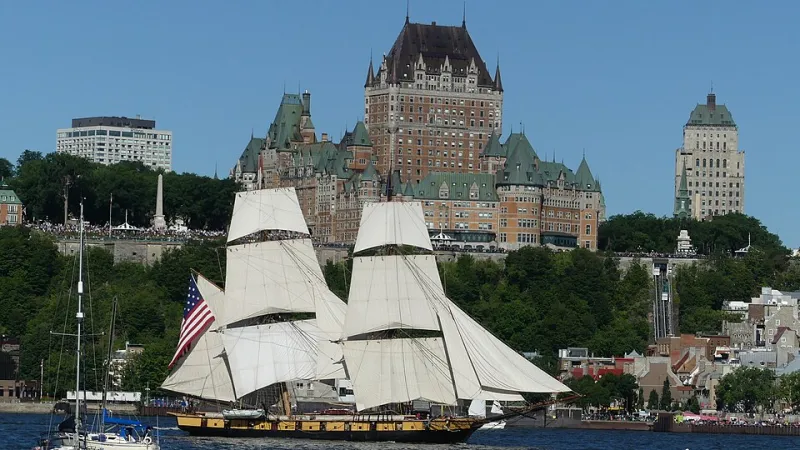
Photo: Marie Thérèse Hébert & Jean Robert Thibault, CC BY-SA 2.0, via Wikimedia Commons
Pennsylvania touches an actual ocean. Not an ocean in the poetic sense — a genuine, ship-wrecking, horizon-swallowing inland sea that sailors have drowned in for three centuries. Yet somehow, when heritage travelers plot their Pennsylvania pilgrimages, they chart routes through Valley Forge and Gettysburg and skip the northwest corner entirely.
That's a mistake, and a two-day weekend in Erie will prove it to you.
Day One: Board the Ship That Won a Lake
Start at the Erie Maritime Museum, because everything else on this trip makes more sense once you understand what happened here in the spring of 1813. Erie was a frontier lumber town of a few hundred people when a 27-year-old commodore named Oliver Hazard Perry arrived with orders to build a navy. There were no ships. There were no sailors. There was barely a town.
What happened next reads like a fever dream: carpenters felled timber in the surrounding woods, blacksmiths forged fittings, and within months, an American fleet slid into Presque Isle Bay — built so fast that British observers on the Canadian side simply refused to believe it. The museum tells this story well, but the real draw sits at the dock outside: the U.S. Brig Niagara, a reconstruction of Perry's flagship from the Battle of Lake Erie.
And here's the part most visitors don't expect: the Niagara sails. She's not a static hunk of wood behind glass. When conditions allow, you can book a passage and help haul lines alongside a professional crew, feeling the deck heel under your boots the way it did for Perry's sailors. Even on days she stays moored, walking her deck — 198 feet of hemlock and white oak — connects you to the September afternoon when Perry sailed his shot-riddled flagship into the teeth of the British line and emerged with the first fleet the United States ever captured intact.
His battle flag said "Don't Give Up the Ship," stitched from the dying words of a friend. Afterward, he sent the most famously understated victory message in American military history: "We have met the enemy and they are ours."
Dinner With a View of the Lake
Wrap day one along the bayfront. Erie's waterfront has been reworked over the decades from industrial edge to public promenade, and Dobbins Landing puts you at the end of a pier with the sunset doing its thing over the water. Grab dinner downtown — Erie's food scene punches above its weight, with plenty of local breweries pouring within a ten-minute walk of the marina.
Day Two: Lighthouses, Harbors, and the Long View
Day two belongs to the water's edge. Start with Presque Isle State Park, the sandy, curving peninsula that shelters the bay — a geological oddball that's technically a recurved sandspit, though nobody in a bathing suit has ever cared. Rent a bike or drive the loop road and stop at the Presque Isle Lighthouse, guiding vessels into the harbor since 1873 and open for climbing in season.
The lighthouse matters to the story more than it first appears. Presque Isle Bay was the natural harbor that made Perry's fleet possible — the sandbar at its mouth kept British warships out while the American navy assembled in peace. Stand on the beach and you're looking at the moat that protected the birth of an inland navy.
On your way back into town, make time for the Erie Land Lighthouse, the first lighthouse on the Great Lakes, lit in 1818 — its light guided the very ships this region built.
Why This Belongs on a Revolutionary-Era Itinerary
Fair question: the War of 1812 isn't the Revolution. But it's the same cast, fighting the same fight for the same stakes. Perry's sailors were the grandsons of frontiersmen; the British veterans at Lake Erie had spent the previous decades fighting Napoleon, and many of the American officers had fathers who fought at Brandywine or Monmouth. The frontier war that Erie anchored decided whether the Northwest Territory — Ohio, Michigan, and beyond — stayed American. In a very real sense, the Revolution's outcome got confirmed on this water twenty-nine years later.
If you've done the eastern Pennsylvania circuit — Independence Hall, Valley Forge, Washington's Crossing — Erie is the perfect second act. It's the other bookend of the same story, told from the deck of a tall ship instead of a marble hall.
The Practical Bits
- When to go: May through October for Niagara sailing opportunities and lighthouse tours; September is ideal — warm water, thinning crowds, and it's the anniversary month of the battle.
- Getting there: Erie sits about 90 minutes from Buffalo and two hours from Cleveland, an easy add-on to any Great Lakes road trip.
- Don't miss: The maritime museum's exhibit on the war on Lake Erie — it contextualizes the Niagara better than any plaque on board.
- Bonus stop: The Tom Ridge Environmental Center at Presque Isle, if you want to understand why the peninsula looks the way it does.
Pennsylvania's colonial story gets told to death east of the mountains. The northwest corner tells the sequel — and it does it from the deck of a warship.