After the Deluge: A Road Trip to the Pennsylvania Towns That Learned to Live With the Water
Pennsylvania has a long, uneasy relationship with water. The 1889 Johnstown Flood is the one everyone knows—the dam, the wall of debris, the headlines. But drive the back roads of Potter, Clinton, Lycoming, and Cambria counties and you will find a second, less famous flood history written in brass plaques, cracked concrete, and small-town museums. This route is for travelers who want the whole story: the engineering that failed, the high-water marks that survived, and the towns that chose to stay.
Stop 1: Austin and the Dam That Broke the Paper Mill’s Promise
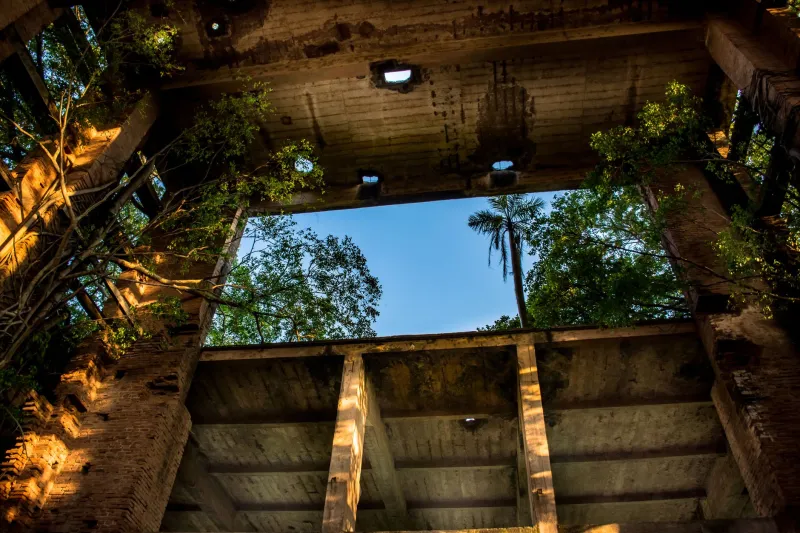
Start in Potter County, where the Austin Dam ruins sit in a quiet park like the ribs of some enormous concrete beast. In 1911, the Bayless Pulp and Paper Mill dam gave way after heavy rain, sending a surge through Austin that killed roughly 78 people. The mill never really recovered. The town did.
At Austin Dam Memorial Park, you can walk among the broken slabs and read the interpretive signs. This is not a polished National Park Service site; it is grass growing through history, which is part of the appeal. Look for the high-water evidence in town—painted lines and plaques on older buildings—and ask at the park about the dam’s short, doomed life. The story here is not just failure. It is a company town learning that the river does not negotiate.
Stop 2: Renovo and the High-Water Marks You Have to Hunt For
Head east on Route 120 through the hollows of the West Branch. Renovo is a good place to stretch your legs and practice the art of flood-mark spotting. In Pennsylvania, high-water marks are rarely museum pieces. They are brass plates bolted to brick, faded paint above a doorframe, or a line on a stone foundation that locals point out with a shrug.
The 1936 St. Patrick’s Day flood and Hurricane Agnes in 1972 both left their signatures across this part of the state. In Renovo and similar river towns, the markers are small, easy to miss, and deeply personal. Stop at a local diner, ask about the old flood lines, and you will usually get a story about a grandmother’s porch or a business that reopened. That is the real exhibit.
Stop 3: Lock Haven and the Levee That Came After Agnes
Lock Haven is where the engineering story turns from failure to defense. When Hurricane Agnes stalled over the Northeast in June 1972, the West Branch rose and downtown Lock Haven filled with water. The response was a flood-protection system—levees and walls that now separate the historic downtown from the river.
Walk the levee and then head into the older blocks to find the Agnes marks. The Heisey Museum, run by the Clinton County Historical Society, is a good place to ground the local story in objects and photographs. The takeaway is not just that the water came. It is that the town rebuilt behind a wall and then had to learn to live with the wall—a different kind of relationship with the river.
Stop 4: Williamsport and the River That Wouldn’t Stay Put
Williamsport is a natural overnight stop, but set aside an hour for the Thomas T. Taber Museum of the Lycoming County Historical Society. Local history museums like this one are where flood history becomes human: scrapbooks, rescue photographs, business ledgers, and the odd high-water relic. The city saw major flooding in 1936 and again in 1972, and the riverfront has been reimagined more than once since.
Take a walk toward the West Branch and look for the older commercial buildings that carry flood lines. Williamsport is also a reminder that flood history is not only about the famous disasters. It is about the repetitive, exhausting work of cleaning out basements and reopening storefronts. The high-water mark is the headline; the mop and bucket are the rest of the story.
Stop 5: Johnstown—Two Floods, One Long Memory
End in Johnstown, where the big story lives alongside the smaller ones. Start at the Johnstown Flood National Memorial in South Fork, where the National Park Service preserves the remains of the South Fork Dam and the cottage colony that watched the water go. The 1889 flood killed more than 2,200 people and turned the city into a national byword for disaster.
Then drive into Johnstown itself. The Johnstown Flood Museum downtown occupies a former Carnegie library and tells the 1889 story with photographs, artifacts, and a film that still lands hard. Walk to the Stone Bridge, which held against the debris and became a grim trap during the flood. And make the short trip to Grandview Cemetery, where the unidentified dead from 1889 rest in a plain, moving plot. Cemeteries are part of flood history, too—often the most honest part.
Do not skip the 1977 flood, either. Johnstown flooded again, and the city’s later history includes another round of loss and rebuilding. The museum and local markers do not let you forget it.
The Practical Route
This is a three-day drive of roughly 250 miles, best done in late spring or early fall when small museums keep reliable hours. Start in Coudersport, spend the first night near Lock Haven or Williamsport, and finish in Johnstown. Call ahead for the Austin Dam Memorial Association and local historical society hours; many are volunteer-run. Wear good shoes for the dam ruins, respect private property when hunting high-water marks, and remember that these are living towns, not just open-air exhibits.
The water left marks. The towns left stories. This drive is how you read both.