Pulse of the City: A Philadelphia Drive Through the Making of American Medicine
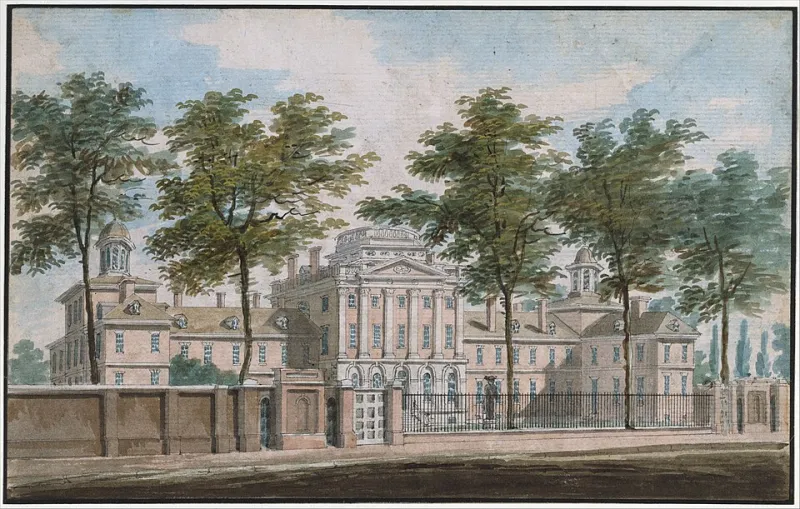
Photo: Pavel Svinyin, CC0, via Wikimedia Commons
Philadelphia sells its founding story in bold type: the Liberty Bell, Independence Hall, the cobblestones, the queue for a cheesesteak. But a few blocks away sits another origin story, quieter and stranger. This is the city where American medicine learned to organize itself, argue with itself, and sometimes fail badly. A car helps you stitch the pieces together, but the real work is on foot: standing outside a brick hospital wing, reading a fever-epidemic marker, peering into a museum case that makes your stomach tighten.
Start Where the Sick Were Sorted
Begin at Eighth and Spruce, at the Pennsylvania Hospital. Founded in 1751 by Benjamin Franklin and Dr. Thomas Bond, it is usually called the first permanent hospital in British North America. The Pine Street frontage is handsome in the way old Philadelphia is handsome: restrained, brick, certain of itself. But the interesting part is not the architecture. It is the idea. The hospital was a civic experiment in who deserved care, who paid for it, and who was expected to recover in a ward rather than a rented room.
Walk the exterior and look for the historic entrances and wings. If the hospital's history is open to visitors, step inside; if not, the streetscape still tells the story. This was not a modern emergency department. It was a charity hospital with paying patients, a place where sailors, servants, laborers, and the poor were sorted by circumstance. That sorting is the thread to follow all day.
The Doctors Decide They Are a Profession
Drive west to 22nd and Chestnut, where the College of Physicians of Philadelphia sits. Founded in 1787, it is the oldest medical society in the United States. The building is also home to the Mütter Museum, which is either the best or worst first stop for a history buff, depending on your tolerance for preserved tissues and old surgical kits. Go in with clear eyes. The Mütter is not a freak show, though it has been accused of behaving like one. It is a cabinet of curiosities built from a doctor's teaching collection, and it raises a question that runs through this whole itinerary: what do we owe the people whose bodies became lessons?
Give yourself time here. The Hyrtl skull collection, the conjoined liver, the famous Soap Lady, the cases of instruments: they are not just creepy. They are evidence of how physicians learned anatomy, how they thought about difference, and how museums have had to reckon with their own past. Read the labels. Notice what the exhibits choose to explain and what they leave in silence.
The Fever That Changed the City
From the College, head south and east toward Sixth and Lombard, to Mother Bethel African Methodist Episcopal Church. The connection is not obvious at first, but it is essential. In 1793, yellow fever killed roughly 5,000 people in a city of about 50,000. The capital emptied. Doctors disagreed violently about causes and cures. Benjamin Rush, a signer of the Declaration and one of the city's most prominent physicians, treated patients with bleeding and purging; his methods were contested then and remain a case study in medical hubris now.
Less famous but more important were the caregivers. Absalom Jones and Richard Allen, leaders of Philadelphia's free Black community, organized nurses, burial crews, and relief. They did so despite a deadly myth that Black residents were immune to the fever. They were not. Mother Bethel, the church Allen founded, stands as a reminder that the epidemic story is not only about doctors making speeches. It is about people who stayed.
The School That Built the Gatekeepers
If you have time for one detour, drive over to Penn's campus and find the markers tied to the medical school founded in 1765. John Morgan's plan for a colonial medical school was a genuine break: American doctors would no longer have to train entirely in Europe. That mattered. It also set a pattern. For generations, the gatekeepers were largely white men. Women were shut out until the Woman's Medical College of Pennsylvania opened in 1850. Black students faced their own barriers. The story of American medicine is not a clean march from ignorance to enlightenment. It is a series of doors, some opened, some bolted.
Make the Loop Work
This is a short drive, not a marathon. Start at Pennsylvania Hospital in the morning, when the streets are still calm. Park in a garage near Eighth and Spruce and walk the hospital block. Then drive to the College of Physicians; check Mütter hours and timed-ticket requirements before you go. After the museum, drive toward Mother Bethel and park near Sixth and Lombard. Finish with a walk toward South Street for lunch, or tack on the Penn detour if you have the appetite.
You can do the whole thing in three to five hours, traffic permitting. Do not attempt it on a weekday at rush hour. And do not treat the sites as isolated attractions. The point is the through-line: a hospital that sorted the sick, a college that organized the doctors, a fever that exposed the city's fault lines, a church that did the work others avoided, and a museum that still asks what a body is for after death.
Philadelphia's medical past is not a triumphant parade. It is a city learning, sometimes badly, what it means to care for strangers. That is a more useful history than any bronze plaque.