Where America Ran on Coal: A Last-Call Road Trip Through Pennsylvania's Industrial Ruins
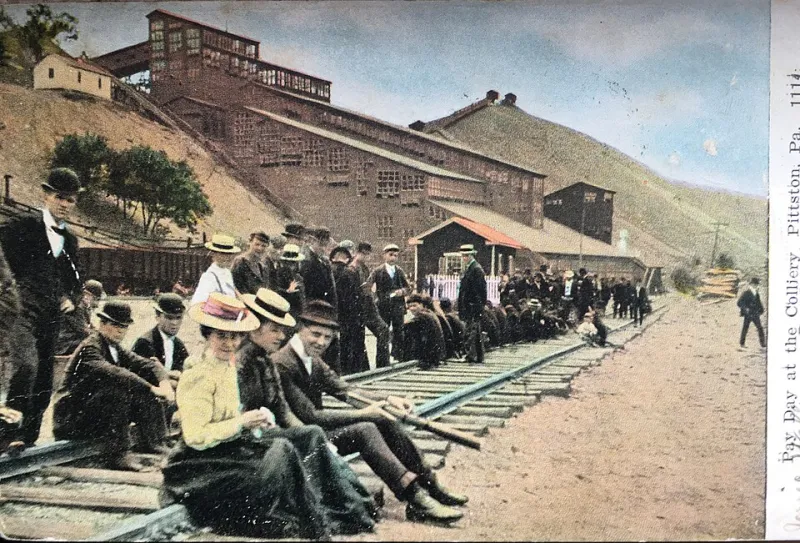
Photo: JohnDziak, CC0, via Wikimedia Commons
Ask most people about Pennsylvania history and they'll talk Independence Hall, Valley Forge, maybe Gettysburg. Fair enough. But there's a second act to this state's story, and it's louder, grittier, and arguably more consequential: the century when Pennsylvania dug the coal, smelted the iron, and moved it all on canals and rails that stitched America together.
Here's the thing, though — unlike a colonial courthouse, a coal breaker doesn't survive on its own. Wooden locks rot. Patch towns empty out. Companies that owned the records went bankrupt decades ago. If you've been meaning to see this side of the state, the clock matters. Here's how to do it right in four days.
Day 1: Steamtown and Scranton's Iron Age
Start where the industry concentrated. Scranton was once so central to iron and coal production that it nicknamed itself the Electric City, and Steamtown National Historic Site is your best single stop on the entire trip. It's a National Park Service unit built around a working rail yard, with locomotives you can climb into, a roundhouse that still turns engines on the turntable, and — if you time it right — a short excursion train along the Lackawanna River.
The park's Technology Museum explains something most visitors miss: railroads and coal weren't separate industries. They were the same industry. Anthracite needed rails; rails needed anthracite. Scranton sits at the center of that feedback loop.
While you're in town, grab lunch at a spot in the Steamtown area, then drive twenty minutes to the Lackawanna Coal Mine Tour in Scranton's McDade Park. You'll descend 300 feet in an original mine shaft with a guide who can usually tell you what mining did to his own family. No exhibit hits like a miner's grandson explaining the price of a ton of coal in 1900.
Day 2: Eckley and the Patch Towns
Head south into the anthracite heartland. Eckley Miners' Village, a preserved company town near Hazleton, is the trip's emotional core. The coal company built everything here — houses, church, store, doctor's office — and rented it all back to the miners. Walk the dirt streets and you're seeing a company town essentially frozen, minus the coal dust.
The museum does honest work explaining the ethnic patchwork of the mines — Welsh, Irish, Polish, Italian, Slovak immigrants who spoke different languages on the same shift. The company used that. Divide the workforce by language and you get cheaper labor and quieter unions.
Spend the night in Hazleton or push on toward Jim Thorpe, which brings us to:
Day 3: Canals and the Switchback
Jim Thorpe calls itself the Switzerland of America, and the Victorian architecture alone justifies the detour. But for this trip, the draw is the water-and-rail infrastructure. The Lehigh Gorge Scenic Railway runs excursion trains up the gorge that once carried coal, and the old Lehigh Canal system — the engineering feat that made anthracite affordable in Philadelphia — threaded right through here.
Look up the remnants of the Switchback Railroad, one of America's earliest railroads, built to gravity-roll coal down the mountains. Portions of its bed are still walkable. Asa Packer, the canal-and-rail baron whose mansion sits above town, built an empire on exactly the infrastructure you've been tracing all weekend.
If you have time, continue west on Route 22 toward Harrisburg and start thinking about canals on a bigger scale — the Pennsylvania Canal once ran nearly the width of the state, and lock remnants still surface along the Susquehanna if you know where to look.
Day 4: Steel Country
Finish with the heavy metal. The Allegheny and Monongahela valleys around Pittsburgh were the forge of the Gilded Age, and the Rivers of Steel National Heritage Area keeps that story alive. The Carrie Blast Furnaces in Rankin — two towering iron furnaces abandoned since the early 1980s — are now a landmark where graffiti artists and industrial archaeologists share space. Guided tours run seasonally, and standing beneath a furnace the size of a ten-story building is the closest you'll get to understanding what "heavy" industry meant.
In Homestead, the Rivers of Steel exhibit space sits on the old Carnegie Steel works site, where the 1892 lockout and battle between strikers and Pinkertons rewrote American labor law. The Pump House still stands. The story still stings.
Why the Urgency
Colonial sites have trusts, endowments, and docents. Industrial sites have rust, budgets, and volunteers. Steamtown has faced funding questions for years. Patch towns like Eckley survive on modest state support. Furnace complexes keep getting demolished for warehouses. Every year, another lock chamber fills in or another breaker comes down.
The colonial story is safe. The industrial story is on borrowed time — which makes right now the best moment to go see it. Pack the car.