Put Down the Battlefield Brochure: Pennsylvania's Real Revolutionary Story Lives at These Seven Places
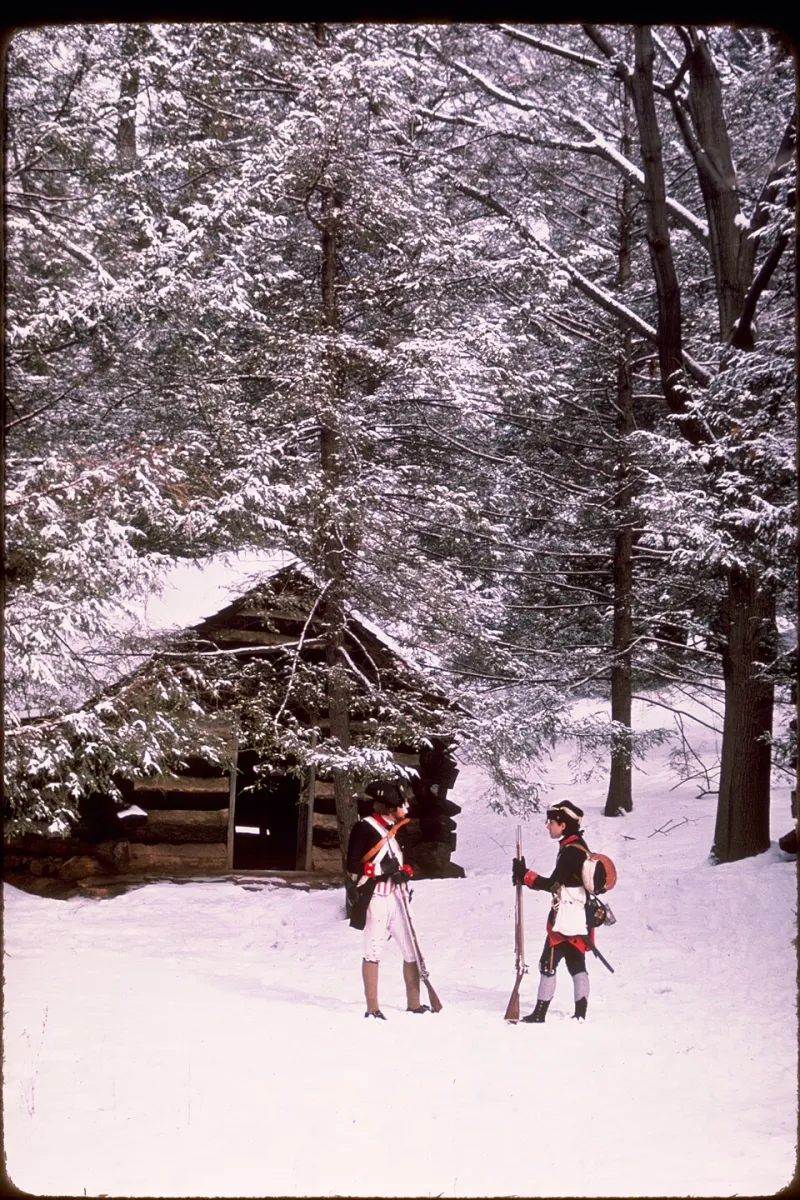
Photo: National Park Service Digital Image Archives, Public domain, via Wikimedia Commons
Here's an unpopular opinion for the history-minded road-tripper: Gettysburg is great, but it's hogging the spotlight. Pennsylvania's Revolutionary War sites — the places where a ragtag continental army was built, bled, and nearly broke — draw a fraction of the visitors. That's a mistake, and it's also your opportunity. Fewer crowds, lower prices, and stories that hit harder because nobody's standing in your way.
1. Valley Forge National Historical Park — King of Prussia
What happened: Winter 1777–78. Washington's army arrived with 12,000 men and left in spring as a disciplined fighting force. No major battle — just disease, hunger, and the slow, brutal work of becoming an army under Prussian drillmaster Baron von Steuben.
What to see today: The reconstructed huts at Muhlenberg Brigade, Washington's headquarters at Isaac Potts' house, and the Washington Memorial Chapel. The 10-mile driving loop is doable in an hour, but get out and walk the Grand Parade grounds.
Nearby stop: King of Prussia's dining scene is 10 minutes away, or loop to historic Norristown for a quieter meal.
2. Brandywine Battlefield Park — Chadds Ford
What happened: September 11, 1777 — the largest single-day battle of the entire war. Some 30,000 troops fought across 35,000 acres of farmland. Washington's flanks were turned by Howe's column, and Philadelphia fell shortly after.
What to see today: The park is smaller than the historic battlefield, so pair the visitor center with a self-guided drive through the surrounding Chadds Ford countryside. Lafayette's quarters at the Gideon Gilpin House are a highlight.
Nearby stop: The Brandywine River Museum of Art in Chadds Ford — Wyeth country — makes a perfect afternoon pairing.
3. Washington Crossing Historic Park — Washington Crossing
What happened: Christmas night, 1776. Washington ferried 2,400 men across an ice-choked Delaware River to surprise Hessian forces at Trenton the next morning. It was the gamble that saved a collapsing Revolution.
What to see today: The visitor center's full-scale Durham boat replicas, McConkey's Ferry House, and — if your timing is right — the famous Christmas Day reenactment, where thousands line the riverbank in the cold.
Nearby stop: New Hope, across the river, for lunch, antique shops, and Delaware River views.
4. Paoli Battlefield Historical Park — Malvern
What happened: September 20, 1777. British forces under General Charles Grey launched a surprise night bayonet attack on Anthony Wayne's sleeping Pennsylvania Brigade. "Paoli Massacre" became a rallying cry — and inspired Wayne's later revenge at Stony Point.
What to see today: A beautifully preserved 44-acre battlefield with a self-guided walking trail, wayside markers, and the Malvern Memorial. It's one of the most intact Revolutionary battle sites in the country, and you'll likely have it to yourself.
Nearby stop: The town of West Chester, 15 minutes south, has a walkable main street and excellent taverns.
5. Fort Mifflin — Philadelphia
What happened: November 1777. A skeleton garrison of fewer than 500 Americans held this river fort for five weeks under the heaviest naval bombardment of the war, buying Washington precious time to consolidate at Whitemarsh while the British occupied Philadelphia.
What to see today: The original 1771 barracks, bombproof, and casements — largely intact. It's also famously haunted, so ghost tours run seasonally if that's your speed.
Nearby stop: The fort sits near the Philadelphia airport; combine with a visit to Bartram's Garden, America's oldest botanical garden, just up the river.
6. Hope Lodge & Graeme Park — Fort Washington and Horsham
What happened: These colonial estates served as encampment and headquarters sites during the 1777 Philadelphia campaign. Graeme Park's Keith House hosted Continental officers, and Hope Lodge's grounds saw army movement during the Whitemarsh encampment.
What to see today: Both properties preserve original 18th-century interiors — a rare window into the domestic world the war interrupted. Check seasonal tour schedules before you go.
Nearby stop: Ambler's restaurant row is minutes away, or push into Montgomery County's covered bridge country.
7. Hope Cemetery & the Paoli Massacre Grave Site — Malvern
What happened: The men who fell at Paoli were buried in a mass grave on the battlefield, and the site became one of the earliest Revolutionary War memorials in America — dedicated in 1817, with veterans of the battle in attendance.
What to see today: The obelisk monument and the surrounding parkland, which connects to the full battlefield trail system.
Nearby stop: Make it a full Revolutionary weekend by looping back to Valley Forge, just 20 minutes east.
The Case for Skipping the Crowds
Revolutionary sites tell a messier, more human story than the polished Civil War narrative. These were decisions made on the fly, armies assembled from farmers, victories that looked a lot like lucky escapes. Pennsylvania is the only state where you can stand in the room where the Declaration was signed, walk the winter camp that forged the army, and tour the battlefield where Philadelphia was lost — all within an hour's drive.
Gettysburg will still be there. Go west another weekend. For now, point the car at the Revolution.